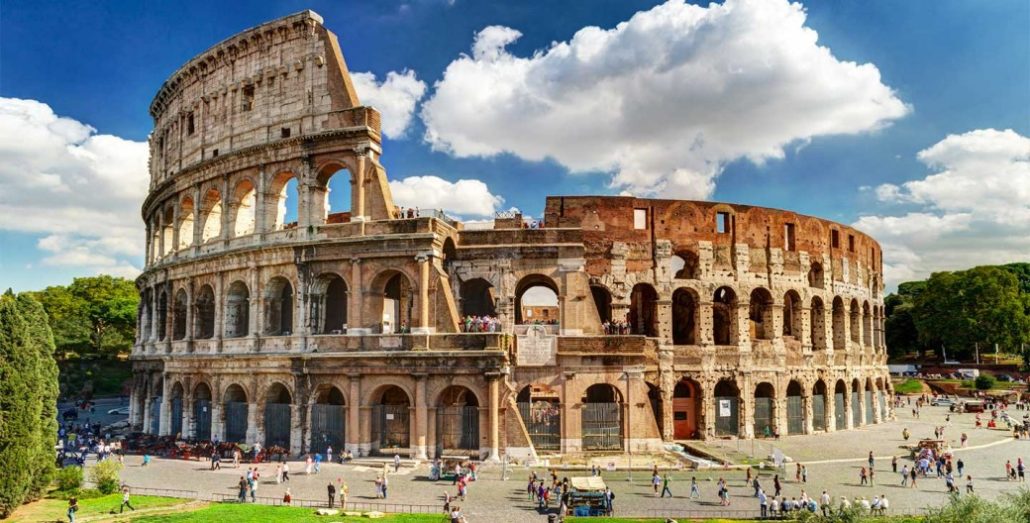
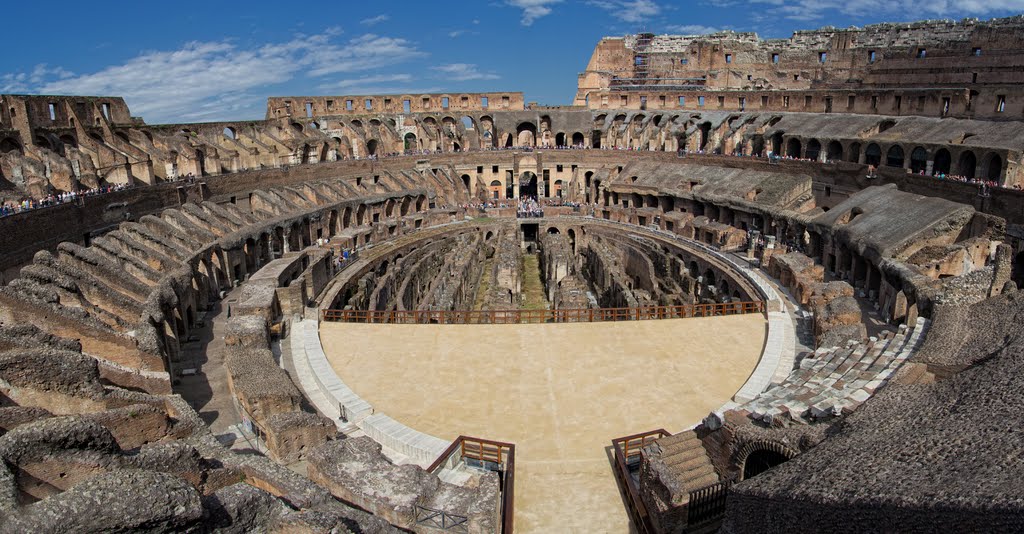
The Flavian Amphitheater, better known as the Colosseum, was the monument that sanctioned the end of the memory of a regime of terror – the regime of Nero – and the birth of a new munific dynasty: the Flavi.
The building was built where the artificial basin wanted by Nero rose to embellish the Domus Aurea. The Construction began in 72 AD and lasted until 80 AD. when the emperor Titus inaugurated it with a magnificent series of munera and venationes.
The real name of the Amphitheater is the “Flavian Amphitheater”, the term Colosseum was coined only after the fall of the Roman Empire and derived from the presence of the of Nero’s colossal bronze statue, survived until the early Middle Ages.
Historians and archaeologists do not agree to establish the number of spectators estimated between 50,000 and 70,000, but this does not make any difference, the monument, its capacity and above all the emotional impact that the games created on the Roman citizens of every social rank have no comparisons with any other monument.
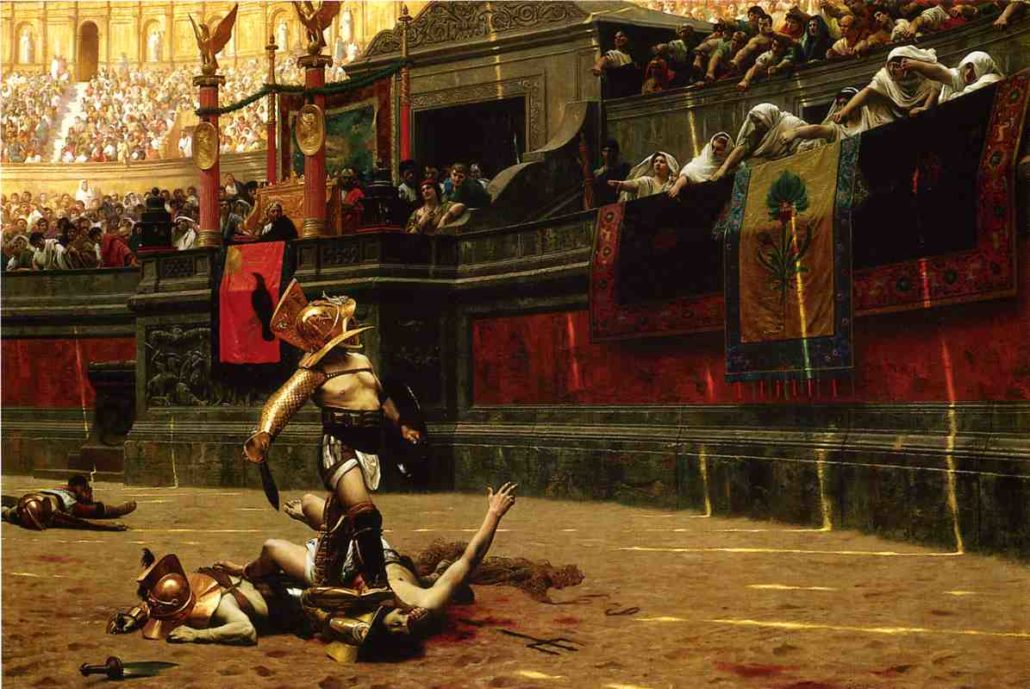
The gladiators were professional fighters, most slaves bought by the “lanario” or the impresario who provided for their training and feeding and “leased” them to the arenas scattered throughout the Empire.
Rome was the desired destination for every entrepreneur, the games were well paid, they were spectacular and the Emperor did not fail to offer his people real champions and refined reconstructions of past battles won by the Roman armies.
We know that gladiatorial games became an effective tool of controlling the masses, and the efficiency of this tool brought in the second century. A.D. to introduce 178 days a year to devote to the games!
Rome thus became the homeland of the “panem et circenses“, a city used to have frequent entertainment and free distribution of grain to those who poured in uncomfortable social conditions … from the Empire began to flow thousands of new citizens attracted by the benevolence of the Emperors.
The Emperors to increase the appreciation of the crowd of spectators, let the crowd decide whether the gladiator should die or live, and so the most disadvantaged citizens forgot their discomfort for a day and became the pivot of the games.
Imagine a society that at the height of its mature well-being, ruler of the known world, became dependent on a deadly show of struggle.
“In the eighth century Bede the Venerable predicted that if the Colosseum had fallen, Rome would fall … fortunately this prophecy has not yet come true”.